Blog Post

Our GTM Approach for Digital Asset Businesses
Daniel Malinovski
·
Co-Founder, Simplicity Group
·
Go-to-market is the integrated motion a business uses to take a product to market and convert demand into revenue. It spans the strategic decisions (who you serve, what you sell, why they choose you) and the execution layer (how you reach them, through which channels, with which message, on what timeline).
It is the operating system that ties product, marketing, sales, partnerships, and capital together; in our experience, whether a launch gains traction or disappears comes down to GTM far more often than to product quality alone.
We have seen many businesses failure and the success be determined by the quality of the GTM. Out of that we have formulated a five-phase loop that runs from research to delivery and back: discovery, market penetration strategy, brand growth strategy, market penetration execution, and brand execution.
Phase 1: Discovery
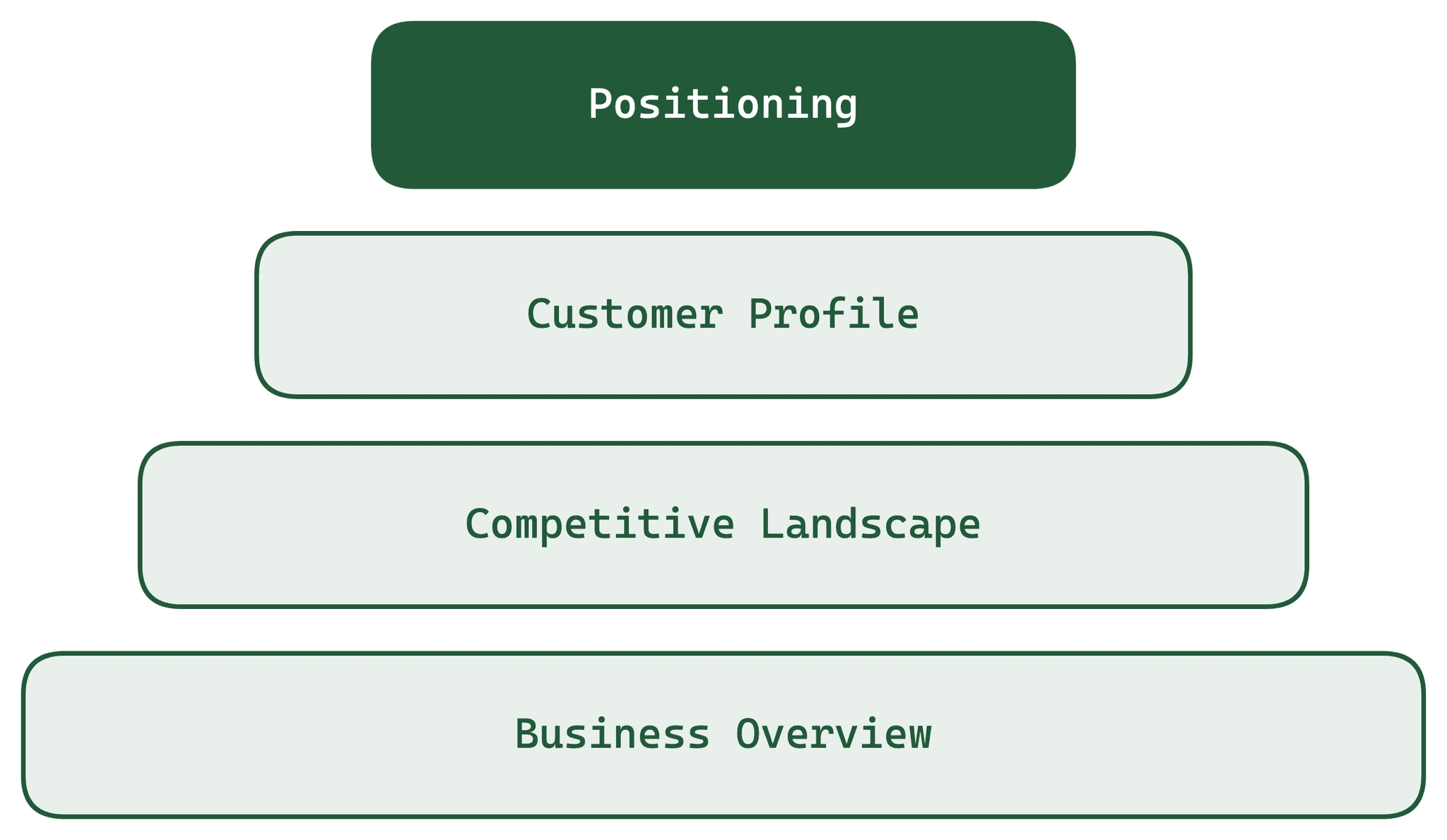
Everything downstream fails if the discovery phase is rushed. Discovery establishes what the project is, who it serves, what it competes against, and how it talks.
Business overview
This includes a detailed breakdown of the product or service, mapped step by step through the user flow. It is honestly remarkable how many businesses cannot explain their user journey.
Next, we look at the problem the product solves and the specific outcome it delivers. Here it is key to understand exactly how the user feels about the problem, and how their problem is solved by the product.
Finally, we look at 6 and 12 month goals, which are stress-tested against current resources (product, team, distribution, traction, capital). If your business does not have key milestones to measure success, how can you understand whether you are growing?
Competitive landscape
Following the inherent understanding of the business, we look at market state and structural trends: where capital is flowing, what narratives dominate, what is rotating out. This is key to understand positioning which comes towards the end of the discovery phase.
We create a competitor map looking at direct and adjacent competitors with funding, traction, and positioning per competitor. Once we understand the resources of said competitors we conduct a detailed SWOT against them, ending in a sharp USP and three to four ACAs.
Customer profiling
Customer Profiling is the most overlooked input in GTM. Most businesses have a vague sense of “the user,” or crypto projects focus on “token buyers” and that ambiguity flows directly into messaging that resonates with nobody.
We force a separation between primary, secondary, and end users; in many products these are three different people with three different motivations, and treating them as one collapses the entire funnel.
For each segment we build a full ICP definition: goals, pain points, current workarounds, and a severity rating against each pain. The severity rating is what tells you which problem to lead with. A pain rated three out of ten will not move a user to change their behaviour; a pain rated nine means the user is already looking for a solution and the only question is whether they find yours.
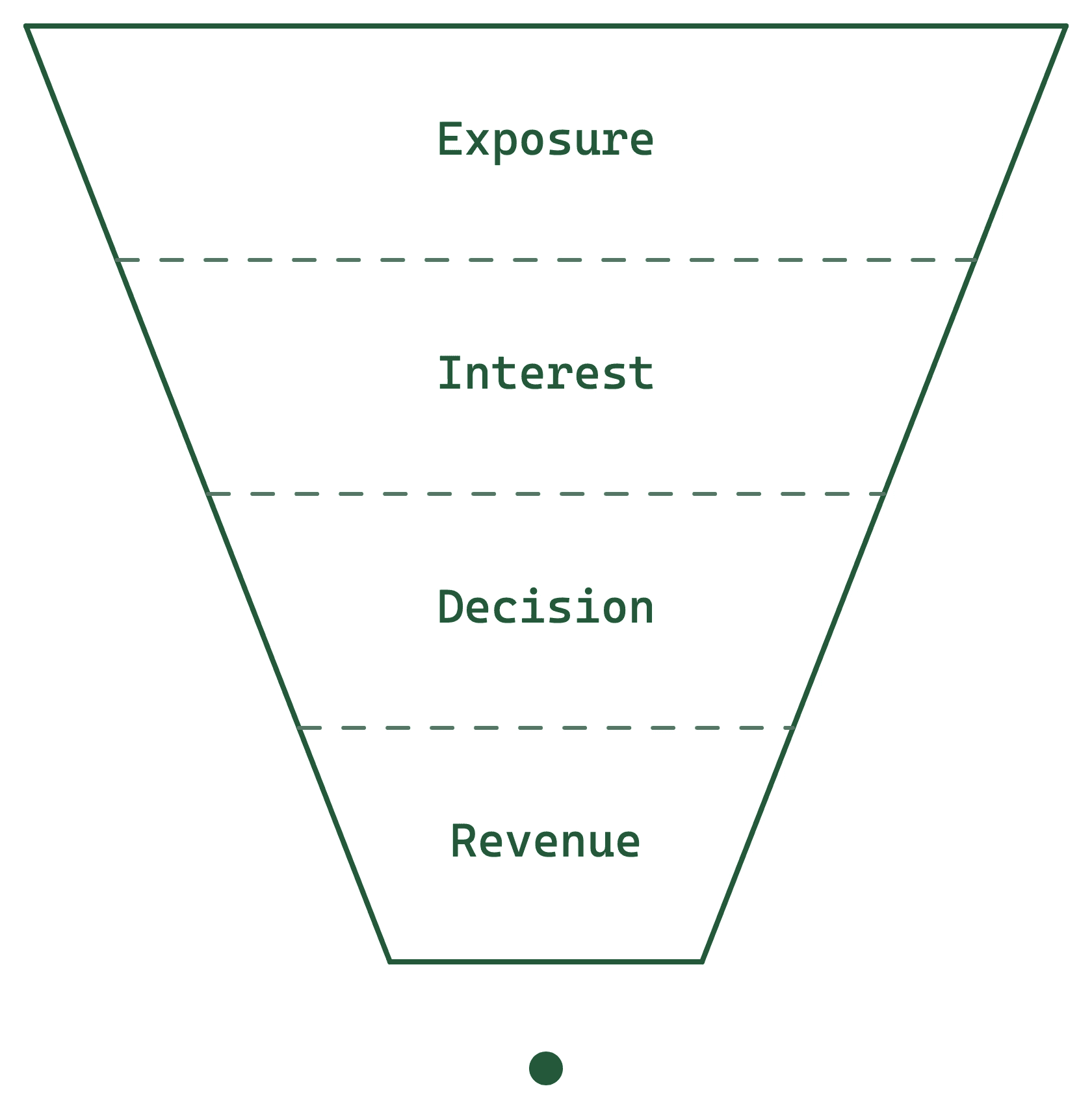
We then map the ICP funnel end to end, every step the customer takes from first exposure to revenue generation, with the friction sitting at each step. This is what tells us where to invest in content, where to invest in product, and where to invest in sales support.
Market positioning
Positioning is what ties the previous three sections together. Without the business overview, the competitive landscape, and the customer profile.
We start with a one-sentence market positioning statement that a stranger can repeat back after one read. Underneath it we build a message hierarchy: a primary message, two or three secondary messages, and the supporting proof points that back each one up. The proof points are a common pitfall for AI and Digital Asset businesses; claims about scale, security, or yield without the data to support them lose credibility the moment they hit a sophisticated audience.
Tone follows the channel. An investor deck does not read like a Telegram post, and a Telegram post does not read like a developer tutorial. We define the tone shift per channel up front so that the brand stays coherent without sounding identical everywhere it shows up.
Phase 2: Market penetration strategy (why and who)
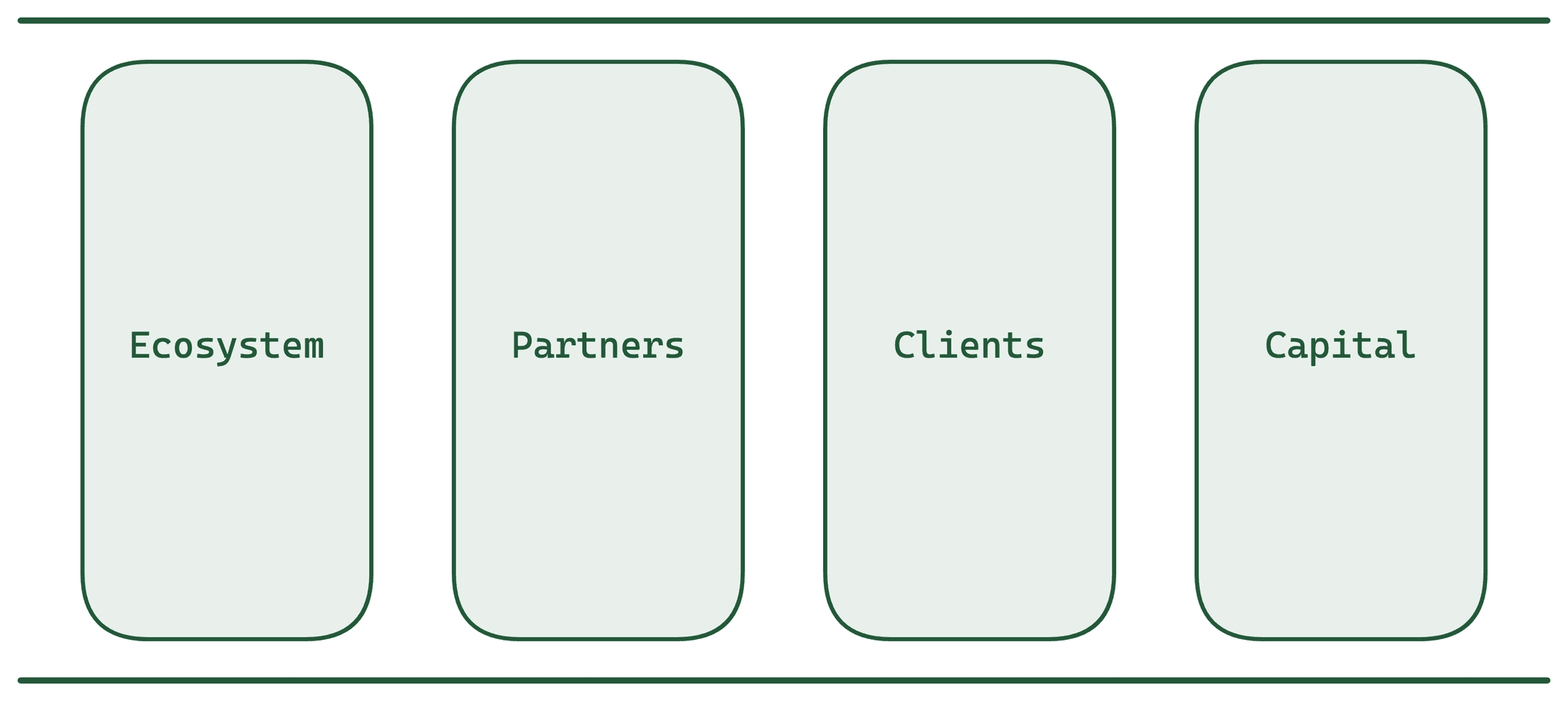
There are four arenas every Digital Asset project has to penetrate, and each one moves on a different timeline with a different stakeholder. Treating them as one undefined group is one of the most common GTM failures we see; an investor pitch is not a partnership pitch, and a foundation grant application is not a client onboarding flow. Each gets its own strategy, its own target list, and its own outreach plan.
Ecosystem
Ecosystem strategy starts with the question: which L1s, L2s, foundations, and grant programmes actually move the needle for this product. The answer is rarely the largest ecosystem by TVL; it is the one whose user base, technical roadmap, and grant capital align with where the project needs to be in 12 months.
From the strategy we build a named list of foundations, programme leads, and DevRel contacts worth approaching, and we map the warm-intro routes, application timing, and message angle per target. Cold applications into a foundation portal sit at the bottom of the pile; a warm intro from a portfolio founder sits at the top. The difference is months of runway.
Partnerships
Partnership strategy looks at which infrastructure, integration, and distribution partners would compound the product’s reach. The test for a successful partnership is mutual benefit. Do not fall for the trap of collecting logos; this no longer works in Digital Assets. A partnership where one side gets distribution and the other side gets nothing dies within a quarter, and the launch tweet is the last thing anyone hears about it.
We build a named list of target partners with the mutual benefit mapped on both sides, then identify who can introduce to said party, what asset goes in the first message (deck, deal sheet, demo), and the outreach strategy.
Clients
Client strategy starts with two filters: willingness to pay and friction to onboard. Many Digital Asset businesses spend months chasing accounts that are technically a fit but have neither budget approval nor onboarding capacity, and the result is a pipeline that looks healthy on paper but doesn’t convert.
We build a named pipeline with the relevant decision-makers identified per account, then set the channel mix, and the right asset for each stage of the conversation. Matching the asset to the stage is the difference between closing a deal and being forgotten.
Capital
Capital strategy is built around the round being raised, not around fund brand recognition. A pre-seed round needs a different fund type, geography, and stage focus than a Series A; sending the same list to both wastes the round.
We create a named list of funds, partners, and angels with thesis fit at the centre. From there we map the warm-intro routes, the data room readiness checks, and prepare the key talking points for each firm. Fundraising is a sequencing problem as much as a pitch problem; running thirty first meetings in two weeks beats running them spread over three months, because every fund hears that other funds are looking.
Phase 3: Brand Growth Strategy
Direct outreach gets the project into rooms; brand growth gets people walking into the room on their own. It compounds the value of every outreach motion in Phase 2, which is exactly why the brand growth strategy has to come after it. Until we know who we are targeting across ecosystem, partnerships, clients, and capital, we cannot brief a credible brand campaign. Once that is locked, the brand growth strategy is set here, and execution then ships alongside the market penetration execution in Phase 4. Running brand growth before the first two phases are in place burns budget on attention the project cannot yet convert.
Campaigns
Campaign ideation runs across the channels that fit the audience: PR, KOLs, events, content.
Channel selection is driven by where the ICP actually consumes information; a B2B infrastructure project does not need a KOL campaign, and a consumer application does not need a tier-one PR push at launch.
Every campaign has a stated rationale and benefit. “We should do PR” is not a campaign; “a tier-two PR push timed to the mainnet announcement to drive developer applications to the grant programme” is.
Budget allocation per campaign is mapped against expected return. Some campaigns are awareness plays with long payback; some are conversion plays with a thirty-day window. Mixing the two without distinguishing them is how Digital Asset projects end up six months in with a six-figure marketing spend and no idea what worked.
Phase 4: Market penetration execution
Strategy without delivery is theatre. Execution is repetitive, slow, and the part most teams underinvest in; it is also the part where outsourced support pays back fastest, because the work is high-volume and process-heavy rather than insight-heavy. The same delivery mechanic runs across all four pillars.
Across all four pillars (ecosystem, partnerships, clients, capital)
Documentation comes first. Every asset for each conversation needs to be ready before the call: one-pager, deck, demo loom, deal sheet, technical spec. Showing up to a partnership conversation without a deal sheet, or to an investor meeting without a data room link, costs the business.
Intros are routed warmly through our network. The reply rate gap between a warm intro and a cold message is not two or three times; in our data it sits closer to ten times, and that ratio is what makes a small team’s pipeline look like a much larger team’s pipeline.
Management is the unglamorous part: arranging the calls, joining where useful, taking notes, owning follow-ups end to end.
Phase 5: Brand Growth
Brand Growth is the delivery of the campaign strategy set in Phase 3, running alongside the market penetration execution from Phase 4. It shares the same posture as Phase 4: high-volume, process-heavy, and unforgiving on details.
Campaigns
Execution is running the calendar, briefing the agencies, writing the copy, managing the talent, and measuring the result against the budget set in Phase 3. Most of the failure modes here are operational rather than creative: a thumbnail that ships a day late, a KOL post that goes out without the tracking link, a press release with the wrong embargo time. Process discipline is what separates a campaign that returns its budget from one that disappears into the feed.
Events sit as a seperate campaign rather than inside them, because the operational load is heavier and the lead time is longer. We handle venue sourcing and booking, event planning, and sponsorship sourcing for the event itself; a side event on the wrong night, in the wrong neighbourhood, with the wrong AV setup, costs the team three months of brand work in one evening. We make sure nothing slips, and that the event converts on the team’s goals.
Whilst the event is often mistaken as the key, what actually matters most is the follow up. The magic of the event is not in the event itself, but rather post event production, follow ups and event ROI tracking. After an event, you only have 48-72 hour window to follow up with leads, prepare a sponsor ROI report, track conversations and start blasting content.


Co-Founder of Simplicity Group. BA Economics and Philosophy, continued to Masters. Advises digital asset and AI businesses on distribution and fundraise strategy; speaker at 25+ conferences across 10+ countries.
Category
Go To Market
Read Time
Go To Market
Brief
Simplicity Group’s end-to-end framework for digital asset growth, positioning, and execution.
Copy Link
Copied!
Share with founders, operators, and teams building in crypto.
Put this into practice
If this article raised questions about your own token or go-to-market plan, our team can help you work through them.